Yep - this is another grumpy ramble from an everyday crank trying to intellectualise his grievances within an increasingly technocratic world… But I reckon I have a point.
So. After a long day at work, you get dressed up and head out to dinner with someone you like. You walk into the restaurant and into the promise of a splendid evening…
The lighting is low. Warm. The kind that makes people look discernibly better than they do at 3pm. The floor has that polished, dark wood sheen - a suggestion of opulence but nothing too ostracising. You notice your work self drifting away and you settle into the mood of the place. You take it in. There’s a small, almost private ritual to arriving somewhere like this. You scan the space. Where would you sit? Near the window? On the balcony? Slightly tucked away at the back where it feels like the rest of the room can’t quite see you?
You’re with someone. They look good. There’s energy and chemistry and all that lovely stuff. You’re directed to the perfect table and you each take a seat. You scan the table for a menu, excited to see what culinary delights await.
And then… those six perilous syllables guaranteed to drain the moment of anything resembling atmosphere: “Just scan the QR code”.
It’s always announced passively, never with eye contact. Like it hasn’t just punctured the screenplay for the evening. You nod, because what else are you going to do, and suddenly both of you are looking down at your phones. Not at each other. Not at the room. At a small black-and-white square that probably won’t work properly.
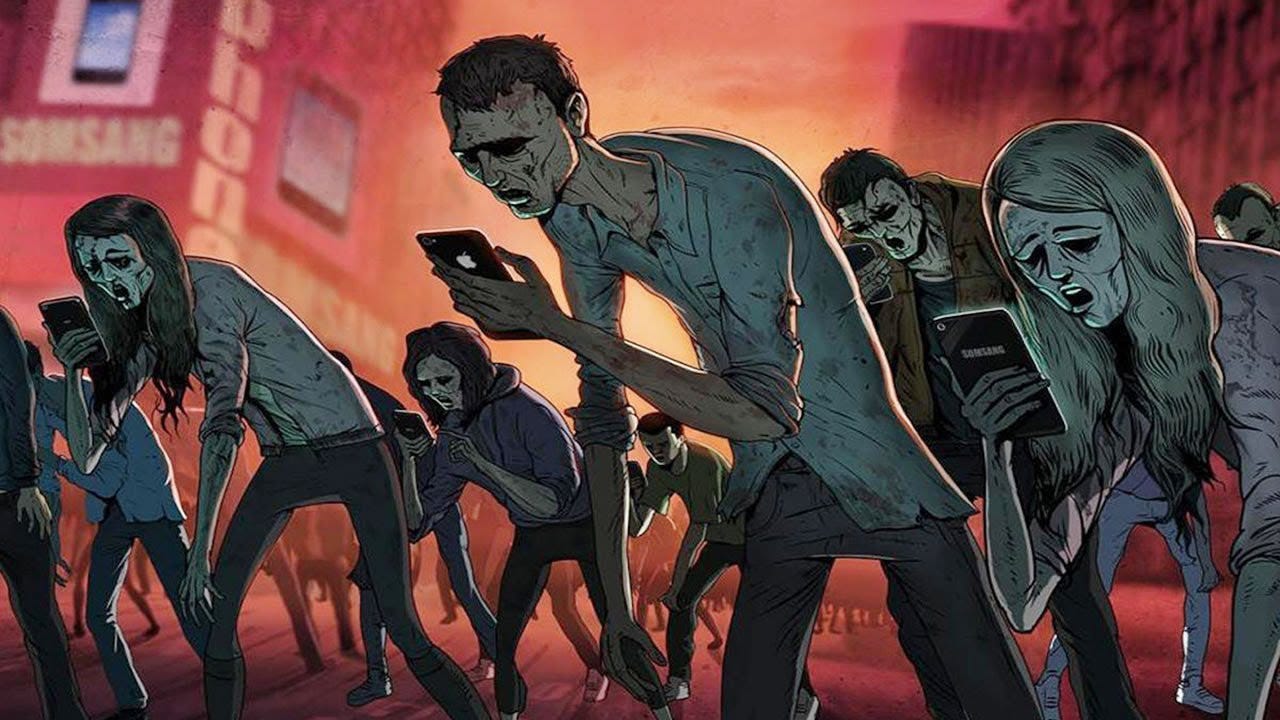
You hold your phone over it. Nothing happens. You adjust the angle. Still nothing. Someone else at another table is doing the same small dance, tilting their phone like they’re trying to balance a marble atop the screen. Eventually it loads, or it doesn’t. In my experience there’s about a one in five chance of malfunction. Dead link. Endless buffering. Irritation creeping in where there was, moments ago, something authentic.
This is what’s left behind from COVID.
QR code menus were introduced for the explicit purpose of ‘social distance’ - a dreadful concept that clashes with every essence of human nature. But, at the time, a necessary evil. Hygiene. Safety. Risk management. QR codes were part of a wider collection of protocols designed to keep people apart. One-way systems, floor markings, masked faces, sanitiser stations, plexiglass screens. All of it organised around a single idea: reduce contact, reduce proximity.
In that context, of course, they made sense. Proximity had taken on a different meaning. It wasn’t neutral anymore. It carried risk. Even something as drab as handing someone a menu felt like passing on a piece of medical uncertainty. Now, the context has gone. The protocol hasn’t. We’ve engrained something that strips out the very thing restaurants are supposed to offer - experience. Not just food. Experience.
There used to be a small, human exchange at the start of a meal. Someone would hand you a menu. You’d hold it, feel it, flip through it. You might ask a question. They might recommend something. There’s a rhythm to that interaction, a kind of low-stakes intimacy. Nothing profound, but not nothing either.
Now there’s a screen. The QR code has become a ‘tertiary object of connection’ (told you I’d start intellectualising…). From a psychological point of view, it’s a neat example of mediation. The interaction is no longer direct. It’s routed through a third object, a piece of technology that inserts itself between you and everything else. You don’t connect to the waiter. You don’t even properly connect to the menu. You connect to a digital interface that stands in for both.
Sociologically, it leans into something we’ve been sleep walking toward for years. What Erving Goffman might have called the erosion of the “interaction order”. Those small, taken-for-granted rituals that structure how we meet, greet, and engage with each other. They’re not dramatic, perhaps not even consciously noticeable. But, remove them, and something feels off.

Sherry Turkle argued that we are increasingly “alone together” (Richard Ashcroft tagged a similar phrase, ‘Alone with Everybody’, for an album). Physically co-present, but psychologically elsewhere. QR code menus don’t create that problem, but they slot right into it. Another incremental shift away from reciprocal attention toward parallel, severed experience.
There’s also something more structural going on. Max Weber described what he called the “iron cage” of rationalisation (bureaucracy). Systems designed for efficiency, predictability, and control gradually become rigid frameworks that people are forced to operate within. The logic of the system takes precedence over the human being in front of it. You don’t adapt the system to the person. You adapt the person to the system. And it’s not just restaurants. It’s banks (“ask our AI assistant…”), gyms (“scan the barcode to enter”…), supermarkets, mobile phone networks (“press 1 for…”…), doctor’s waiting rooms (“take a ticket”…). Of course, I get it - cost cutting, streamlining, optimising, scaling… I know it’s inevitable, but it’s increasingly intolerable.
I went into a café recently to grab a simple coffee. Americano. That’s it. Black coffee. Absolutely no theatre required. Except there was no cash register, no menu, no human exchange. Just a QR code and an app. Fine.
I scan it. The menu loads. I find the Americano. I press order. And then it asks me to choose a milk option. There isn’t a “no milk” option. I try to bypass it. It won’t let me proceed. The app is effectively telling me that I cannot buy black coffee unless I also add milk. I refresh. Same problem. I try again. Same loop.
Frustration builds, not because this is a major life problem, but because of how unnecessarily stupid it is. I look up, trying to catch someone’s eye. There’s a sole staff member, in addition to the barista, lurking around. I explain. They gesture, without much interest, back toward the QR code. Use the app. I try again. Still nothing.
Obvs, it’s not about the coffee anymore. I am now incandescent with rage about the most basic of coffee orders. This is about being trapped in a system that won’t bend, even when it’s clearly wrong. I ask, directly, if I can just order and pay, you know, like a human. They tell me they don’t take any other form of payment.
No workaround. No flexibility. Just ‘the system’. That’s the iron cage right there. A perfectly rational setup that produces an irrational outcome, and no one inside it has either the authority or the inclination to step outside it. I had someone, recently, hold up their phone in a business exchange and ask me to scan a QR code to get their contact details. I stood there for a good ten seconds, awkwardly adjusting my phone, trying to get the angle right. It felt ridiculous. Two adults, face to face, unable to exchange something as simple as a number without involving a third device that neither of us particularly wanted in that moment.
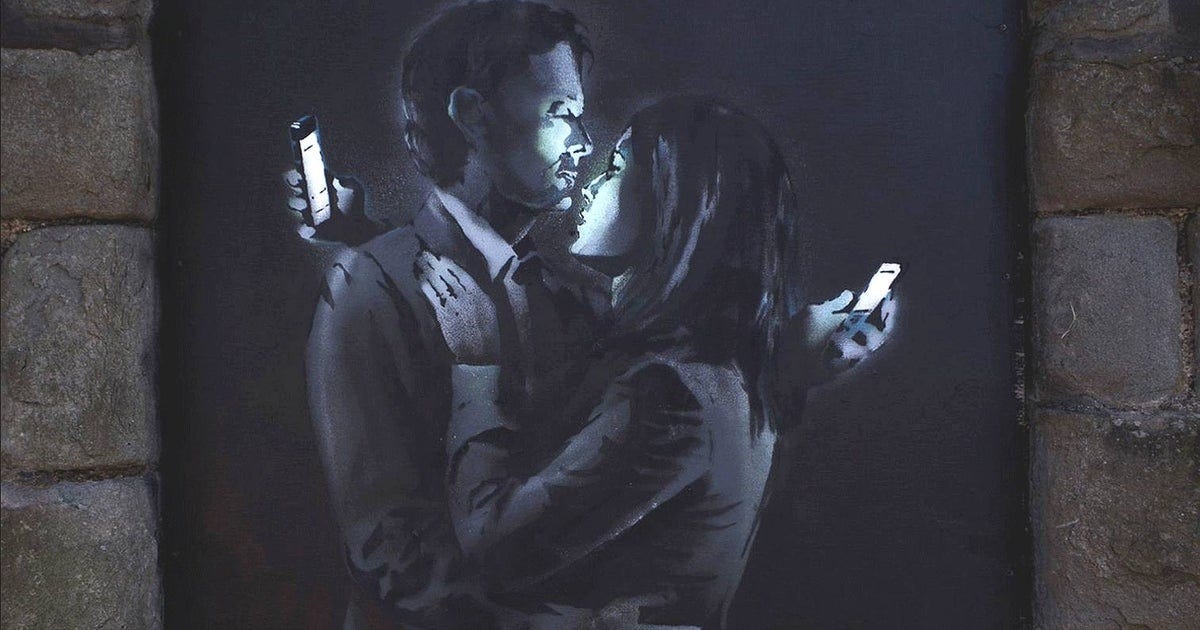
A business card would have done it. Or just saying the number out loud.
Instead, we introduced friction where none needed to exist.
That’s the pattern. QR codes, in theory, are about efficiency. In practice, they often do the opposite. They slow things down, they fail just enough to be irritating but not enough to be ousted, and they remove the human layer that made the interaction feel like something more than a transaction.
Experience is not just the outcome. It’s the texture. The small, seemingly trivial moments that sit around the main event and give it shape. The glance across the table before you order. The brief conversation with the person who knows the menu better than you do. The shared object in your hands that you both point at, comment on, etc.
Replace that with a QR code, and you don’t just change the medium. You alter the entire moment.
We seem to have forgotten why we introduced these things in the first place. They were about creating social distance. Well - they’ve absolutely worked!