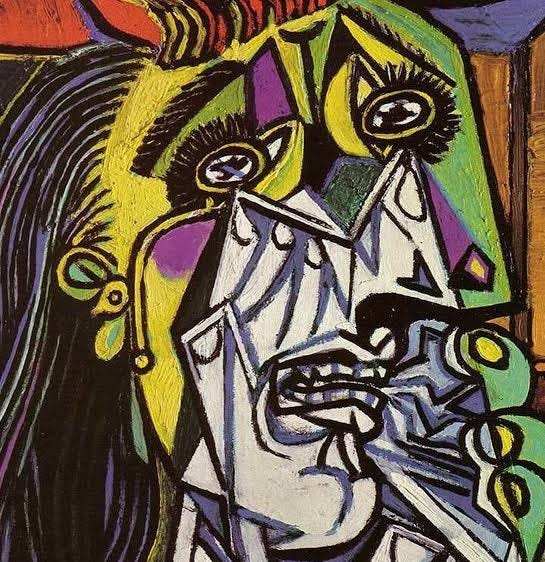
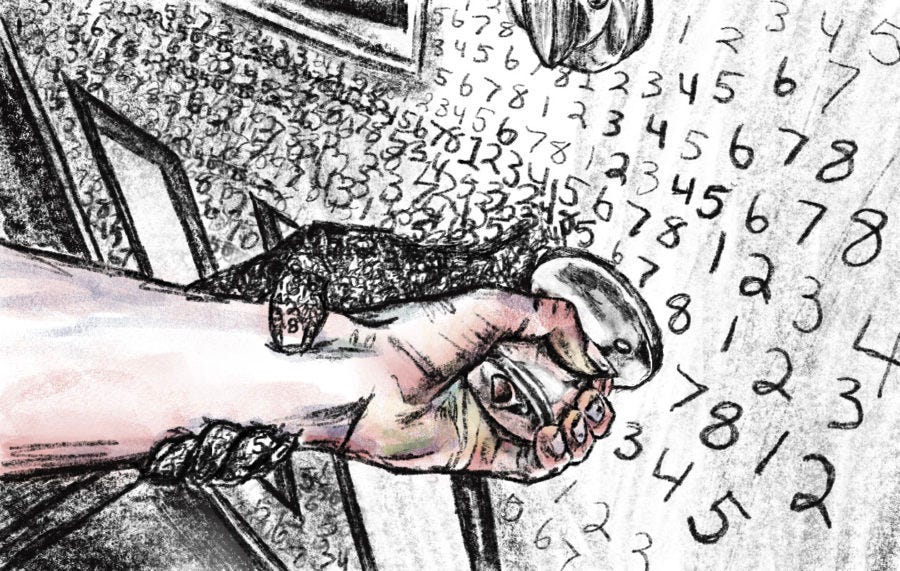
My friend Jochem and I recorded an episode about this recently for a new podcast I am putting together called ‘That Resonates!’. The episode explores something that has become (in my view tragically) normal: the difference between contemporary “methods” of dating and what people might now think of as old school or traditional approaches. By traditional, we mean something fairly radical in the year 2026 - walking up to another human being and speaking to them. As opposed to swiping at them like a compulsive swipey thing from Swipeville. Indeed, research (probably) now tells us that people have swiped left on about 50 people on the toilet before breakfast.
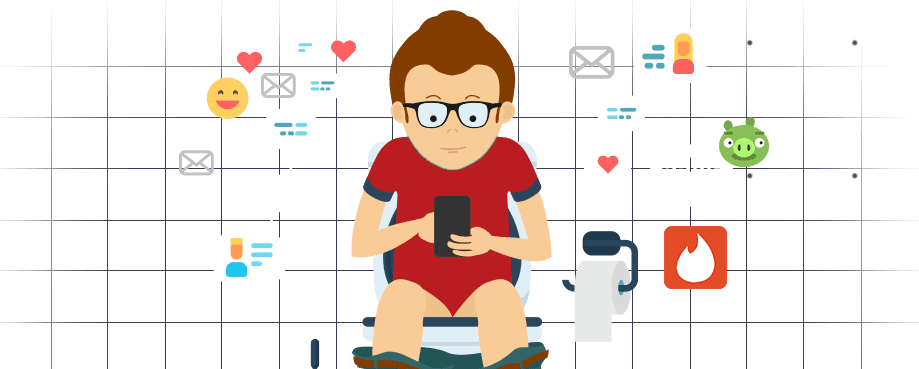
It struck both of us during the conversation that dating apps have managed to transform one of the most ancient and emotionally complicated human activities into something that resembles browsing for used cars. People scroll through faces in a state somewhere between boredom and passive stimulation, pausing occasionally to award a stranger the digital equivalent of a double take before returning to the carousel. If this feels slightly dystopian, that is because it is. Psychology has been warning us about this ‘trap’ for quite some time.
Too Much Jam
One of the most cited experiments in behavioural science took place in a supermarket. In 2000, Sheena Iyengar and Mark Lepper arranged a tasting table displaying different varieties of jam. Sometimes shoppers encountered six jars. Sometimes they encountered twenty-four.
The larger display attracted more attention, which makes intuitive sense. Human beings are drawn to abundance. We like the feeling that possibilities are expanding rather than shrinking.
But when researchers looked at what happened next, the result was counterintuitive. When shoppers saw six options, around 30 percent eventually bought a jar. When they saw twenty-four, only 3 percent did. Abundance created paralysis.
This phenomenon is now widely known as the paradox of choice (Iyengar & Lepper, 2000). As options multiply, the cognitive burden of choosing increases, along with the creeping suspicion that whatever we pick will be disappointing and thus we will have made a mistake. Dating apps are essentially the jam experiment, except the jars are people, often curated with Facetune, or whatever, just to further compound the process of choosing. Oh, and the shelf never ends. Stock never runs out. Sign me up!
The Contrast Machine
There is another psychological mechanism fueling swipe culture. Robert Cialdini, in his work on persuasion, describes something called the contrast principle, which simply means that our evaluation of something is heavily influenced by what we encountered immediately beforehand.
Lift a heavy object and then pick up a lighter one and it feels almost weightless. Look at an average face immediately after viewing a series of extremely attractive ones and your perception shifts accordingly. Studies on attractiveness judgments demonstrate exactly this effect: when participants view highly attractive faces first, subsequent faces are rated as less attractive by comparison (Kenrick & Gutierres, 1980; Cialdini, 2009).
Dating apps transform this into a permanent cognitive environment. Users do not encounter one potential partner in isolation. They encounter dozens in rapid succession. Every swipe is therefore a small comparative exercise in which the brain recalibrates its standards based on whatever appeared moments before.
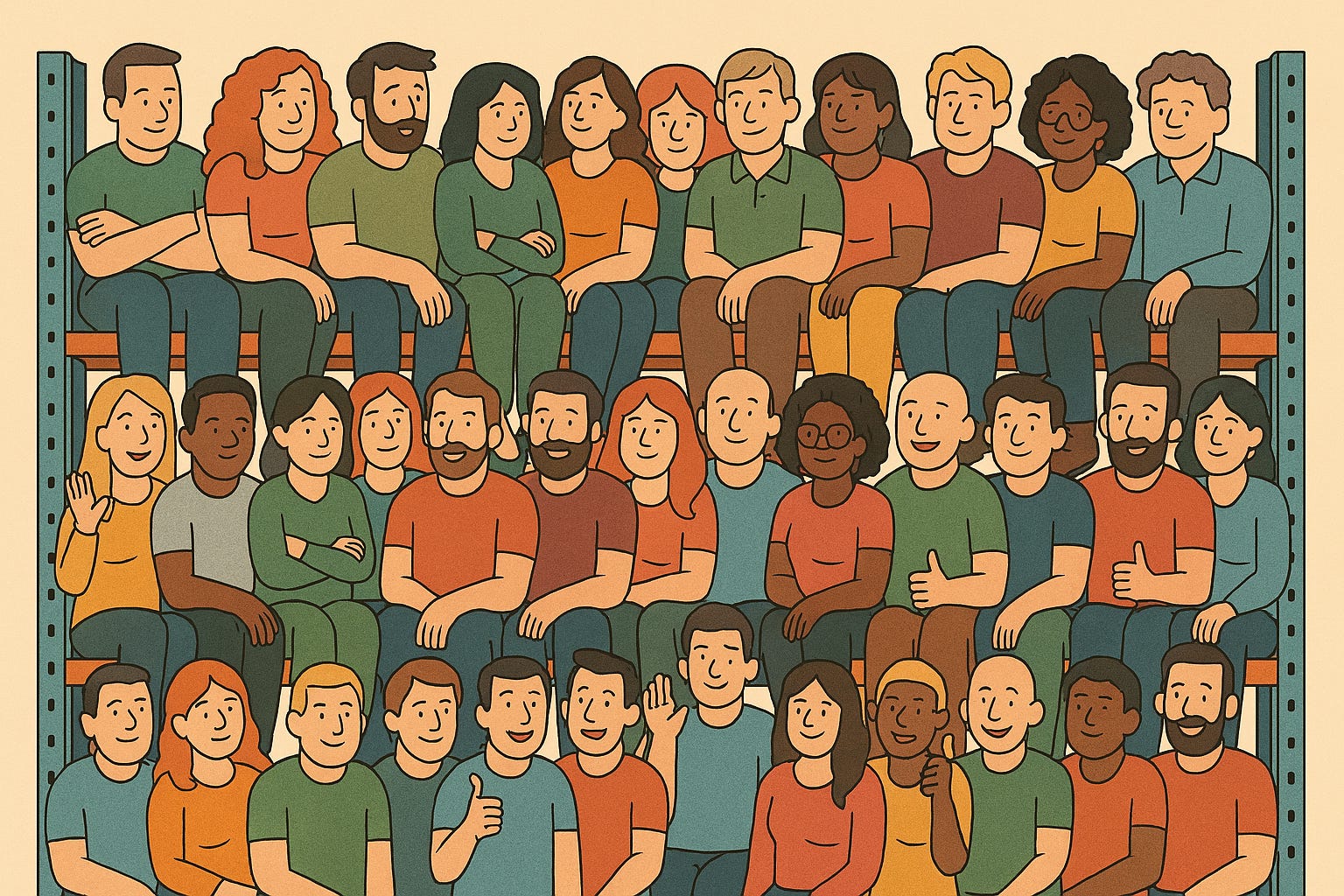
The person on the screen is rarely evaluated in a singular or contextually bounded way. They are judged against the episodic memory of the previous five swipes and the possibility that the next one might be marginally better. This creates a continuous stream of incremental valuation, contributing to a pretty callous commodification process via which humans become shelf-stacked inventory. I know - so romantic.
The Paralysis of Abundance
At first glance, dating apps can feel quite progressive. For most of human history, the pool of potential partners was extremely limited. People met the individuals who happened to inhabit the same social geography. A village, a workplace, a social circle, perhaps the neighbouring village if you had a mate who could make introductions.
Dating apps appear to remove this limitation entirely. The pool expands to hundreds or thousands of potential matches. But abundance carries psychological side effects.
The more options people perceive themselves to have, the harder it becomes to commit to any single one (back to the jam...). Choosing someone implies rejecting a vast catalogue of other possibilities. As the perceived catalogue grows larger, commitment begins to feel premature, even irrational or careless. Many users therefore hover in a perpetual state of tentative engagement, talking to multiple people without ever settling into a deeper interaction with any of them. Sound familiar?
The Economy of Ego
Over time I have started to think about dating apps in terms of what might be called an economy of ego. Each match produces a small psychological dividend. A notification appears. Someone you have never met has decided that your face, or your sexy outfit, or your really clever ironic bio deserves attention. It’s a micro dose of sweet sweet validation. A small ego token, if you will.
The crucial detail is that the app rewards the accumulation of these tokens, not the development of a relationship with the person who provided one of them. The behavioural loop therefore becomes obvious. Swiping generates the reward. Conversation, vulnerability, and the slow construction of intimacy are far less efficient ways of obtaining it.
Why invest in one conversation when you could collect three more ego tokens in the next sixty seconds? In economic terms, swiping becomes the very rational strategy. In human terms, it produces a peculiar emotional landscape in which people feel simultaneously validated and yet discernibly lonely.
Rejection Resilience
This brings us back to the discussion Jochem and I were having on the podcast.
Dating apps have not only changed the environment in which people meet. They have also begun to erode a psychological protective factor that used to be central to courtship: the ability to approach another person in the physical world and risk a small amount of embarrassment, and then deal with it, dust yourself off, and go again. This has been referred to as rejection resilience.
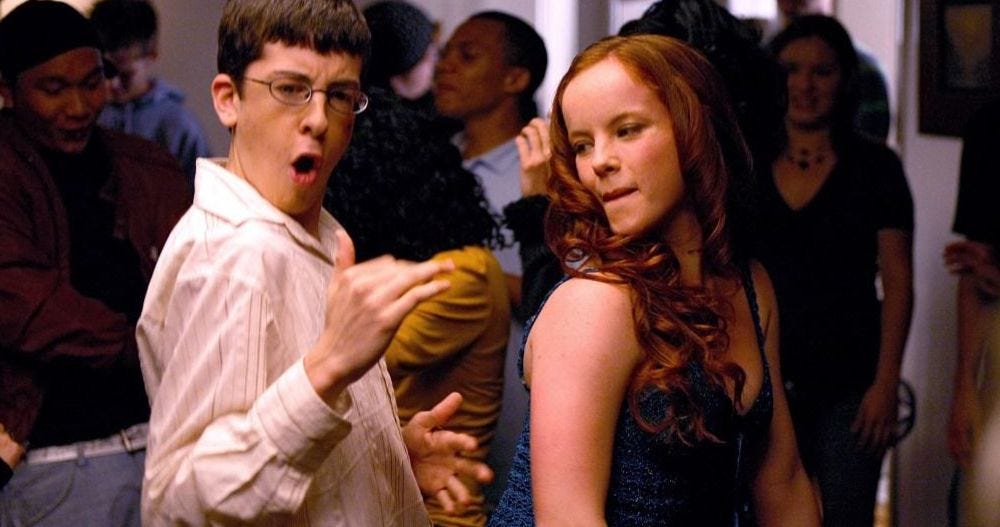
Approaching someone in a bar, a café, or a party has always involved uncertainty. You might be welcomed warmly. You might be politely rejected. You might say something mildly ridiculous and spend the next three years remembering it and fighting the urge to slap yourself.
But this awkwardness performs an important social function. It requires vulnerability. It demands presence. It forces people to engage other human beings rather than get lost in a curated sequence of emotionless pictures. Swipe culture removes most of this interactional angst and tension. It replaces the unpredictable social encounter with a frictionless interface designed to maximise engagement.
The Hope for an Analogue Rebellion
Personally, I struggle to see many genuine positives in dating apps beyond their ability to expand the pool of potential introductions. I get that we’re all busy and can’t reasonably be heading out all the time to try and meet people the ‘old fashioned way’, and there are some arguments for safety (though easily combatted - Tinder Swindler, rise in stalking, love scams etc etc), but I see the positives buried beneath spades of negatives. First and foremost, the design incentives of dating apps are aligned with continued usage, not necessarily with helping people form stable relationships and disappear happily from the platform. They are advertising spaces, not ecological breeding grounds for true love.
From a business perspective, two people falling in love and deleting the app forever is not the optimal outcome. Nevertheless, human beings eventually notice when a system no longer serves them. Many people already recognise the emotional fatigue produced by endless swiping, infinite comparison, and the monotony of half-conversations that evaporate after three messages.
At some point a cultural correction should occur.
My hope is that people will rediscover the inimitable thrill of ‘analogue’ dating strategies. Walking up to someone in a social setting. Offering a compliment. Feeling silly. Going red. Starting a conversation without an interface supervising the process.

There is risk involved in this approach. It requires a degree of courage and vulnerability that swipe culture has very deliberately rendered obsolete. But it also affords the possibility that something real might begin because two slightly nervous strangers decided to speak to each other and see what happened.
References
Cialdini, R. (2009). Influence: Science and Practice. Pearson.
Iyengar, S., & Lepper, M. (2000). When choice is demotivating: Can one desire too much of a good thing? Journal of Personality and Social Psychology, 79, 995–1006.
Kenrick, D., & Gutierres, S. (1980). Contrast effects and judgments of physical attractiveness. Journal of Personality and Social Psychology, 38, 131–140.