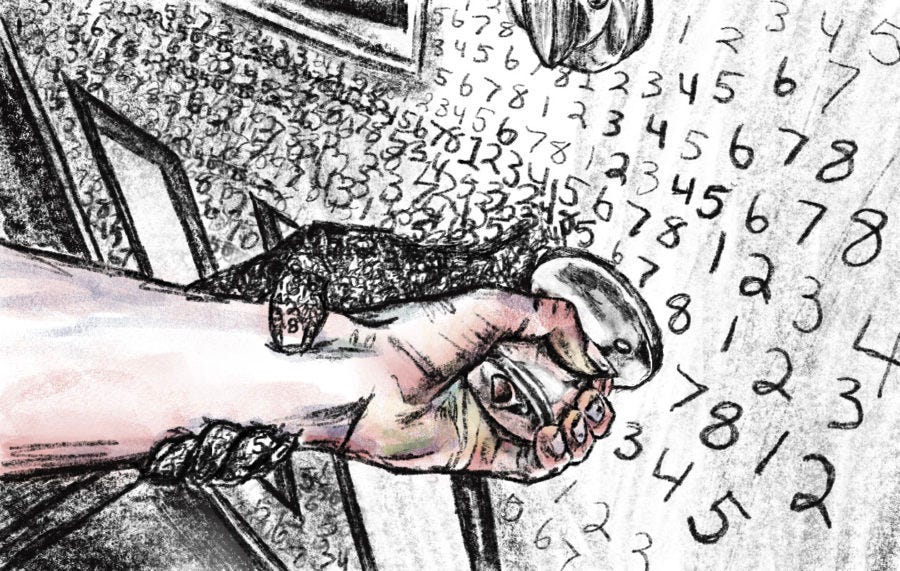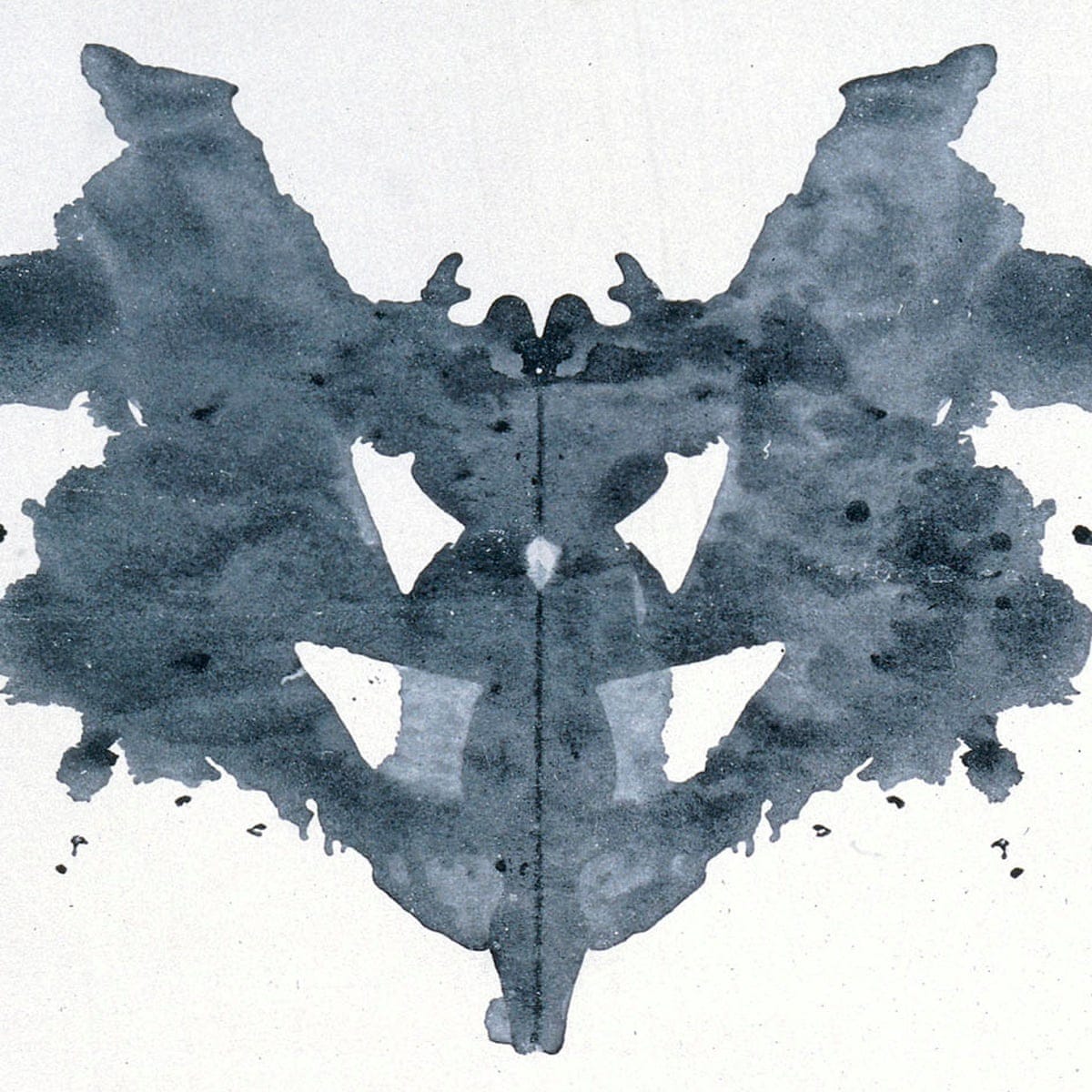
Uncle Paul called me last week, still buzzing, having just seen Fontaines D.C. play in Cádiz. Our favourite band, in a beautiful part of Spain, on what by his account was a jolly good evening. He did, however, comment that he thought Grian Chatten (a King among mere mortals), the lead singer, looked sad up on stage. Somewhat weighed down, even mid-performance, by what Paul thought might be grief - the singer having recently lost a friend, whose life had been cut short in utterly tragic circumstances.

I’d seen clips from other dates on the same tour, and if nobody had told me anything about a loss, I don’t think I would have noticed a thing. Same stage presence, same delivery, nothing that read to me as obviously “sad” rather than just intense, or tired, or simply how the man performs - with that archetypal grungy moodiness we’ve been acquainted with since Cobain invented it. My uncle wasn’t wrong to wonder what he wondered. But it struck me that what he was seeing, and what I was seeing, weren’t quite the same performance, even though the performance itself hadn’t changed at all.
That’s the observation this article is fueled on, and I want to give it a proper name: perceptual contingency (you know me well enough now to know, as an academic, I adore a pretentious linguistic tag). Perceptual contingency is the idea that what we perceive is never a neutral read of the world, but is instead shaped, cumulatively and constantly, by the knowledge, expectations and prior experience we bring into the act of perceiving in the first place. To explain what I mean by it properly, it’s worth starting somewhere older than psychology.
Contingency, Before We Complicate It
Contingency is a fairly old philosophical idea, and in its classic form it has nothing to do with perception at all. It’s about existence itself. Sartre, most famously in Nausea, has his narrator stare at the root of a chestnut tree and feel overwhelmed by the sheer, unjustified ‘thereness’ of it. The root doesn’t have to exist. Nothing about the world logically demands it. It’s simply there.
Here’s a more everyday version of the same thought. Why does your kitchen table look exactly the way it does, in exactly that room, in exactly this life you happen to be living? There’s no deeper logic behind it. It could easily have been a different table, in a different kitchen, belonging to a different version of you. Nothing about it was necessary. It’s just there, one way rather than another, for no better reason than that’s how things happened to fall. Sartre’s word for this was contingency, and once you really sit with it, the whole world starts to look faintly absurd: gratuitous, oddly specific, surplus to requirement, what he called “de trop.”
Perceptual contingency borrows that same structure and drags it into the much messier territory of how we read other people. If existence itself has no necessary meaning attached to it, then neither does a facial expression, a delayed reply, or a particular way of standing on a stage. The behaviour simply occurs. It doesn’t arrive pre-labelled as “grief” or “irritation” or “boredom.” We supply the label, using whatever interpretive material happens to be lying around in us at the time, and then we go on to treat that label as though it had been there all along, built into the person.
We put our interpretation onto things, and then those things become what we interpret them to be. My uncle put grief there, because grief was the most recent, most emotionally loaded piece of information sitting in his head that night. Now, Grian probably was grieving. Perhaps there was a 100% correlation between Paul’s perception and Grian’s experience, but that’s not really the point.
Perception Was Never Just “Looking”
This is where Edmund Husserl (founder of ‘phenomenology’, which is the ‘brand’ of ideas I’m talking about here) becomes useful, because he spent a great deal of effort dismantling the idea that consciousness simply receives complete, ready-made objects from the world. Take a coffee cup on your desk. You never see the whole thing at once, not the underside, not the inside, not the bit facing away from you, and yet you don’t experience a confusing jumble of angles and colours. You experience “a coffee cup,” fully formed, because your mind fills in everything you can’t currently see using everything you already know about cups.
The object exceeds what’s actually given to you. Perception is always doing interpretive work before you’ve had the chance to consciously interpret anything.
Husserl also gives us a useful method for noticing this, which he called bracketing, or the ‘epoché’ (stay with me): the attempt to suspend your habitual assumptions about a thing, your “natural attitude” towards it, in order to look at what’s actually being given to you in experience, rather than what you’ve already assumed about it. With a coffee cup, bracketing is a fairly manageable exercise. You can, with effort, try to see the shapes and colours themselves before your mind rushes to supply “cup.”

With a person, bracketing becomes considerably harder, arguably impossible, because the “assumptions” aren’t a neutral backdrop you can politely ask to step aside. They’re built from history, memory, culture and every previous person this one reminds you of, and they don’t wait for permission before organising what you see. My uncle couldn’t have watched Grian with a completely clean slate that night even if he’d tried. Whatever had put the idea of loss in his head that week (a conversation, a memory, something he’d read) was already shaping what he saw before the first song started.
The Problem With Other People
When you look at another person, you get a face, a voice, a posture, some words, bits of body language. That’s the entire dataset. From those scraps you construct an entire internal universe: anxious, bored, posh, attracted to you, secretly furious, grieving, plotting your downfall, judgmental, compassionate, trustworthy, dishonest.
Some of that story is reasonable inference. A lot of it isn’t. Some comes from what you already know about this specific person, some from every other person who has ever reminded you of them, some from cultural scripts about what sadness or anger is “supposed” to look like, and a fair amount comes from you: your own history, your insecurities, whatever you happened to be thinking about on the drive over. Etc.
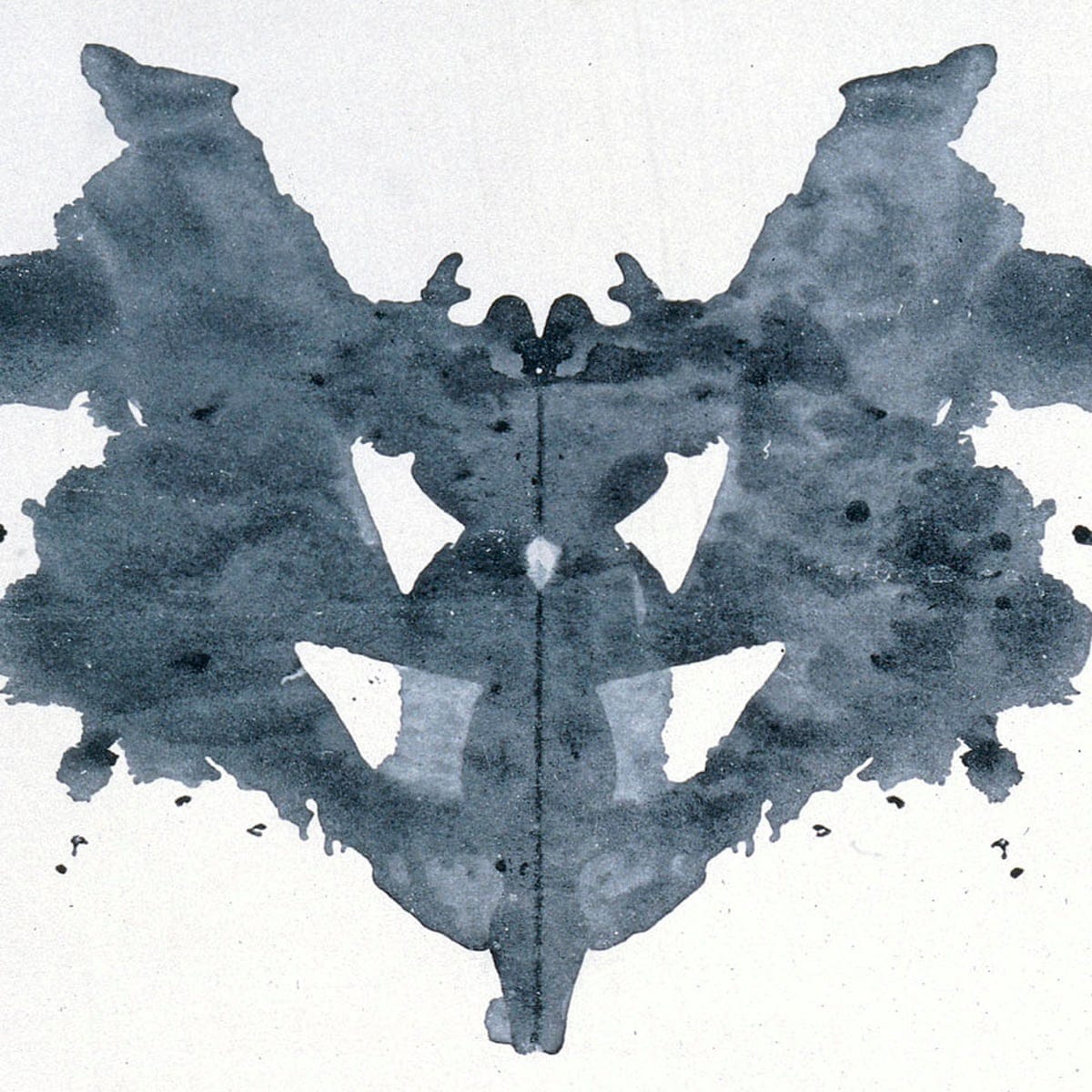
If someone speaks the way a previous boss did right before firing you, that whole relationship is now shadowed by caution. If you’ve just been told a stranger is “difficult,” you will find the evidence, because you’re not really looking for whether they’re difficult, you’re looking for confirmation. You’re not consciously thinking “he lost a friend, therefore he looks sad onstage.” It’s subtler than that: grief has simply been foregrounded as a live possibility, and once it’s foregrounded, it starts organising everything you notice next. Again, this isn’t ‘bad’ or a ‘mistake,’ it just is.
Foregrounding: The Internal Machine Doing the Work
Foregrounding is probably the clearest way to describe the actual mechanism here. Attention is limited, so your mind is constantly promoting some details to prominence while letting others recede into the background, and what you already know rearranges that hierarchy almost instantly.
Tell someone a person is anxious and they’ll notice the hands. Tell them the person is lying and they’ll notice the pauses. Tell them the person dislikes them and they’ll notice the lack of eye contact. Tell them the same person is attracted to them, and they’ll notice the exact same lack of eye contact, and read it as nerves rather than disdain.
Same presentation of behaviour, opposite conclusion, no new information whatsoever. This is also why two people can watch the identical performance and give completely different, sincere accounts of it, without either of them lying. They didn’t just draw different conclusions from the same footage; in a meaningful sense, different aspects of the footage were even available to them in the first place.
Frames, Gossip, and Why You Can Never “Meet Someone Fresh” Again
Erving Goffman’s Frame Analysis offers a companion idea, since he spent a career studying how people answer the deceptively simple question of what is actually going on in a given situation. His answer was that situations don’t announce their own meaning. We understand them through frames, pre-built interpretive templates that tell us what kind of scene we’re in, and information received before an interaction can build that frame before the interaction has even started.
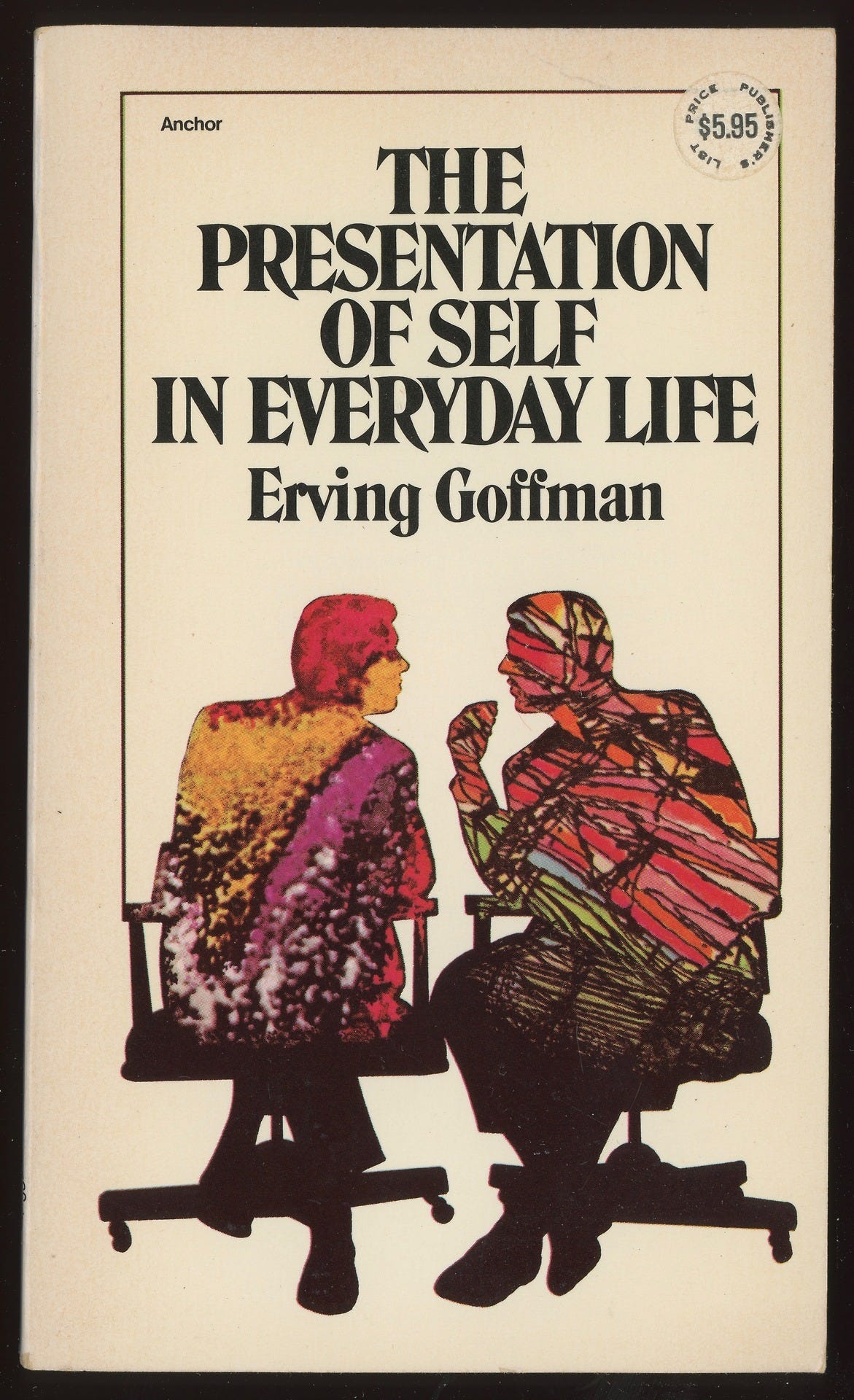
Tell me someone is furious about yesterday, and I don’t walk in neutral. I walk in scanning for anger, so a clipped sentence becomes irritation, silence becomes hostility, and a facial twitch I’d normally ignore gets promoted to Exhibit A. This is part of why gossip is such an effective social weapon: it doesn’t just transfer information about a person, it renovates the perceptual conditions under which you’ll next encounter them. Once someone has been described to you as difficult or cold or “a bit much,” it becomes almost impossible to meet them without also meeting the description standing just behind them.
We Never Just Watch, We Immediately Start Explaining
Susan Sontag’s essay Against Interpretation was ostensibly about art, but her core worry, that interpretation can consume the thing it’s meant to be explaining, applies uncomfortably well to how we treat each other. We rarely let another person’s behaviour simply exist; we’re already explaining it before we’ve finished noticing it. Why hasn’t he replied? Why did she go quiet at dinner? Why did they look at that way?
A slow reply becomes proof of declining interest, a partner wanting one evening alone is evidence of emotional withdrawal, and a cancelled dinner represents the first crack in a friendship. Sometimes these readings are correct, sometimes they’re wildly off, and either way, once the interpretation enters, everything noticed afterwards gets recruited to support it rather than test it.
Where This Gets Genuinely Consequential: Long-Term Relationships
Ten years into a relationship, a sentence is never just a sentence. It drags every similar sentence that’s been said before it: the argument from three years ago, the tone that usually precedes bad news, what happened last time they said “I’m fine.” Thousands of prior interactions get compressed into the current one, whether either person likes it or not. This can make intimacy efficient, since you can understand someone from the smallest gesture, but it can also make intimacy a trap, because eventually you become so confident you know what someone’s behaviour means that you stop actually encountering them and start encountering the history instead. This is roughly why couples end up arguing about things that were barely said out loud in the first place: neither person is really responding to the current sentence, but to a different accumulated horizon of every similar sentence that came before it.
The Uncomfortable Bit
Other people are, and will remain, fundamentally inaccessible to you. You can love someone, live with them, share a bed and a mortgage for thirty years, and still never once occupy their consciousness. There is always a gap between your experience of them and their experience of themselves. That gap gets filled, whether you ask it to or not, with interpretation.
This isn’t a flaw you can engineer your way out of, and you wouldn’t want to, because prior experience is precisely what makes other people intelligible at all. Without it, every conversation would start from zero, and no relationship could ever accumulate any depth. There is no problem in that we interpret. The problem is forgetting that we’re doing it - the moment perception starts feeling indistinguishable from fact rather than a construction we built. “He’s angry.” “She’s jealous.” “They don’t respect me.” Maybe. But something happened in the gap between the observable behaviour and that conclusion, and you were very much involved in producing it.
A Few Questions Worth Asking Before You Trust Your Own Certainty
Recognising perceptual contingency doesn’t mean abandoning interpretation, which isn’t really on offer anyway. It means holding your interpretations a little less like sacred fact and a little more like a first draft. Some useful questions to keep in your back pocket:
What’s been foregrounded for me right now, and by whom?
What did I already know walking into this?
Whose behaviour, from my own past, am I using as the template for this person’s?
What would I think this meant if I’d been told nothing beforehand?
What am I actually observing, versus what have I added on top?
There’s a real distance between “he looked away when I asked” and “he looked away because he’s hiding something.” The first is a fact. The second is a story, and it might well be the right one, but knowing the difference at least gives you somewhere to stand while you work that out.
We Never See What’s in Front of Us, Only What’s in Front of Us Plus Everything Else
We never encounter just the person standing in the room, or on the stage. We encounter them alongside memory, expectation, culture, every relevant relationship that came before, and a lifetime of interpretive sediment. Sartre gives us the underlying claim that nothing comes pre-loaded with necessary meaning. Husserl shows us why perception always exceeds what’s actually given, and offers bracketing as a way, however imperfect, of noticing the assumptions doing the work. Goffman shows how frames decide what a situation is even allowed to mean. Sontag warns us about what gets lost when interpretation buries the thing it was meant to explain.
Put together, they point at something unsettling: when you look at another person, you are never simply seeing them, you are seeing them from somewhere. So the more useful question concerns the conditions that made this particular version of them visible to you: what got foregrounded, what disappeared into the background, and what might come into view if the frame changed? Sometimes the person in front of you hasn’t changed at all. Only what you know about them has.