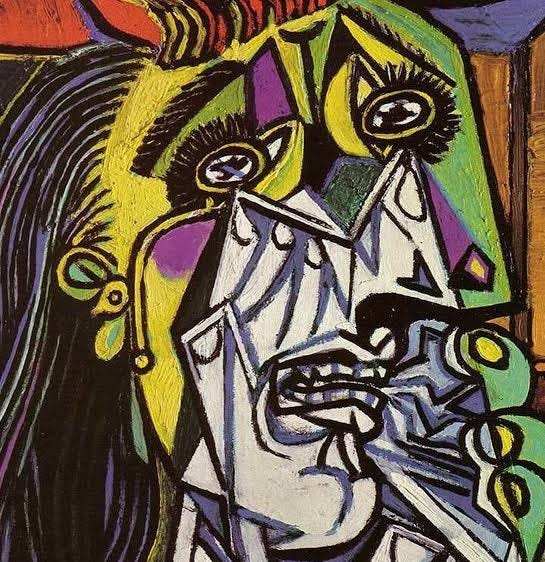
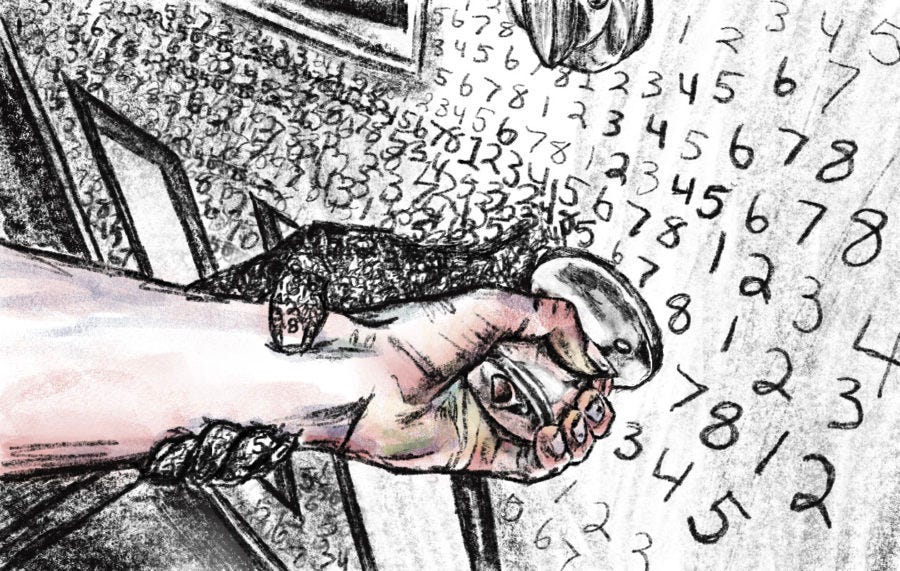
A few weeks ago, I saw yet another headline suggesting that AI might replace therapists. Excellent news.
As a psychologist, I have spent years training, studying, supervising, and working with people through some of the most difficult periods of their lives. Naturally, I am delighted to discover that all of this can now be replaced by a chatbot that can also tell me who invented shoelace tape, generate a picture of a hamster dressed as Napoleon, and diagnose my sensitivity to light. Why is it always a brain tumor? FFS.

Anyway. I agree. AI will probably replace us all. Accordingly, I should just do the responsible thing and tell you why you should just go ahead are sack (UK) / fire (US) your therapist. Here are three reasons why you should hire AI instead.
1. It agrees with everything you say.
This is one of its greatest strengths.
Imagine spending £100 or 500 AED sitting opposite a therapist who occasionally challenges you, points out contradictions, asks difficult questions, or notices patterns that you cannot see yourself. F*ck that. I’m paying you to make me happy.
AI, on the other hand, is remarkably good at validation. Whatever story you bring to it, there is a reasonable chance it will tell you that your interpretation is understandable, justified, and worthy of further exploration. Even if it doesn’t, you can let it know, and it’s quick to realise it was wrong and will apologise to you.
Your ex was definitely a toxic narcissist, your boss is certainly the problem, you’re not irresponsible with money at all, your professor absolutely does hate you and that’s why you got a low grade. Appeal!
The problem, of course, is that growth rarely happens through endless agreement. Sometimes the very thing we need is another human being willing to say, carefully and compassionately, “Are you sure that’s true?”. But, again, f*ck that.
2. AI is cheaper.
Why pay for therapy when you can receive psychological guidance for the price of a Netflix subscription?
This is especially compelling if you ignore the awkward detail that most health insurance policies in Dubai cover a substantial proportion of therapy costs, often somewhere between 70 and 100 percent depending on your provider and policy.
It is also helpful if you ignore the equally awkward fact that there is currently very little evidence demonstrating that AI therapy is an effective replacement for qualified mental health professionals. There is, however, a growing body of concern about misinformation, over-validation, poor risk assessment, and the tendency of AI systems to reinforce beliefs rather than appropriately challenge them.
So there’s a risk of continuing on in life, with symptoms of poor mental health, unchallengingly plodding on through years of unhappiness. Still, saving money is important.
3. You never have to leave your house.
No travelling. No waiting rooms. No awkward initial conversations about stuff you’ve kept private for ages. No sitting across from another human being and allowing yourself to be seen. You can stay exactly where you are, glued to the same screen that already delivers your news, entertainment, shopping, dating, outrage, and existential dread. The beauty of this arrangement is that you never have to practise being a human with another human. You never have to navigate eye contact. Ew.
You never have to tolerate vulnerability. F*ck that!
This is particularly unfortunate because the therapeutic relationship itself is one of the strongest predictors of successful therapy outcomes. Not the technique, or the homework, or the carefully curated case formulation. The ‘here and now’ relationship.
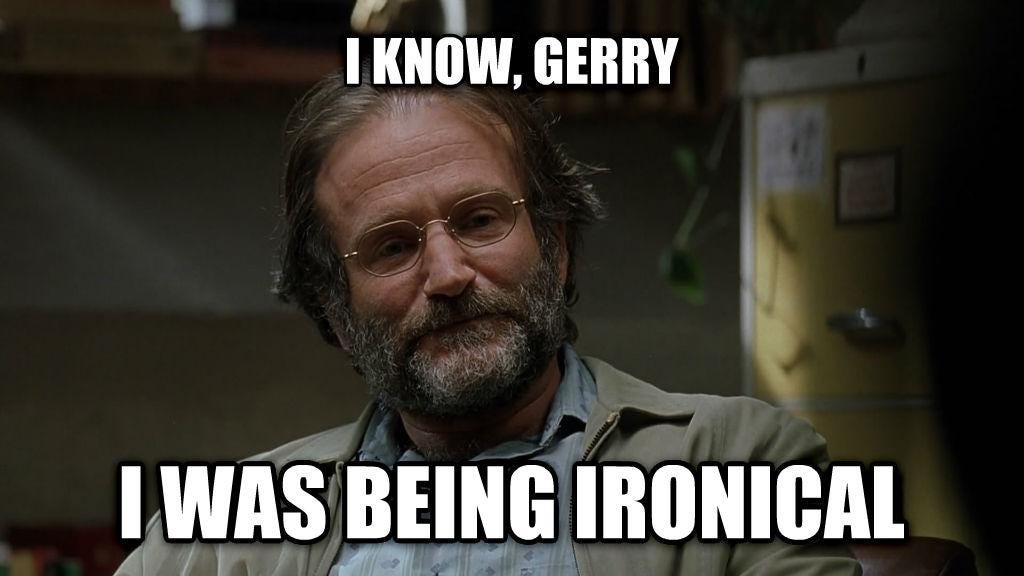
By now, you’ll have realised this was a really clever article-in-reverse, akin to the ending of an entangled movie featuring multiple contrasting plotlines. Ahhhhhh!
In all seriousness though, AI has a place in mental health. It can be useful for psychoeducation, journalling prompts, mindfulness exercises, and helping people organise their thoughts. I use it myself for various tasks.
But there is a difference between a tool and a therapist.
A calculator is useful. It is not an accountant. Google Maps is useful. It is not a tour guide. Likewise AI is not and will never be a substitute for a genuine therapeutic relationship with another human being.