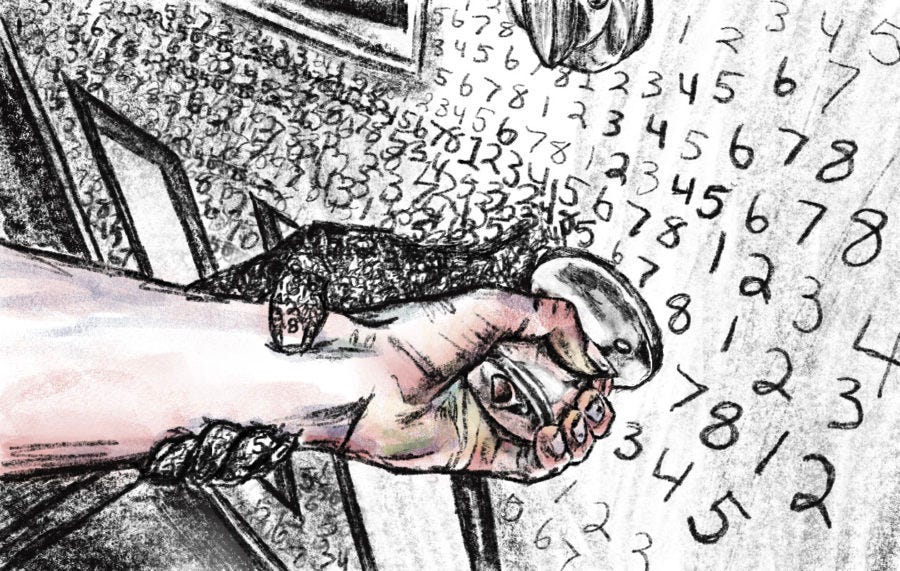
Guilt is like a shadow, following us through almost every rite of passage, relationship, and significant human experience. It is an opportunist, waiting to strike at any moment of vulnerability. We might not be able to swerve it entirely, but we can learn how to soften its blow, create space from it, and contemplate what it’s asking of us.

Guilt was never a rational thing; it distorts all the faculties of the human mind, it perverts them, it leaves a man no longer in the free use of his reason, it puts him into confusion Edmund Burke
I love this quote from the 18th-century Irish philosopher Edmund Burke because guilt really does seem capable of perverting almost everything it touches. Once it takes hold, almost anything can become evidence for your mind’s panel of prosecution lawyers.
A message you didn’t send. A conversation you should have handled differently. The last thing you said to someone. The last thing you didn’t say. Working when you should have been with somebody. Shouting at your kids. Being with somebody while thinking about someone else. Ending a relationship you knew had to end and then feeling entirely responsible for the devastation caused by doing so.
Guilt pervades every aspect of being human.
It seems especially difficult to avoid wherever there is attachment. Break-ups are an obvious example. You can know that a relationship has become destructive, incompatible, or simply finished, and still feel terrible about leaving. You can also be the person who was left and find yourself constructing an elaborate case against yourself afterwards. I should have listened more. I should have been less difficult. I should have noticed. I should have tried harder.
Death brings its own particularly cruel version. Anyone who has lost somebody important will probably recognise the mind’s extraordinary ability to find things to prosecute itself for. I should have visited more. I should have called. Why didn’t I answer that phone call? I should have realised something was wrong. I should have been honest earlier. I should have appreciated them more while they were here. Should should should should SHOULD. Even feeling relief after somebody has been ill for a long time can become another charge against us.
Work is another, especially odious, category. Success can produce guilt when friends or colleagues are struggling. Ambition can make us feel selfish. Rest can make us feel lazy. Saying no can feel like letting somebody down. Leaving a job can feel like betrayal. Staying in one can produce guilt about wasting our lives.
Parenthood, which I’ve yet to experience, seems almost designed to generate the stuff. Am I working too much? Am I present enough? Have I been too strict? Too permissive? Did I damage them by doing that? Should I have noticed this sooner? Did I pass on my bad genes? Did I traumatise them? Parents can get to feel guilty while working because they are away from their children and guilty while spending time with their children because they are not working. Sign me up!
Almost every rite of passage and every human experience involving relationships, and quite a few involving work, seems to be shadowed by a looming inevitability of guilt.

Psychologically, this makes some sense. Guilt is a profoundly social emotion. To experience it requires some awareness of other people, our obligations towards them and the consequences of our behaviour. In its useful form, guilt tells us that we may have violated one of our values. I was cruel. I neglected somebody. I behaved selfishly. I need to apologise. I need to repair something. I need to behave differently next time.
We probably wouldn’t want to eliminate guilt altogether. A person genuinely incapable of experiencing it would not necessarily be psychologically liberated. They might be an absolute nightmare. The problem is that guilt has terrible quality control. Imagine guilt as an overzealous recruiter - finding the credentials of the guiltily vanquished in everyone and everything.
This is where Burke’s observation becomes useful. Guilt is not always a reliable moral judgement. It can distort the faculties we use to make those judgements in the first place. Causing somebody pain does not automatically mean you have wronged them. Ending a relationship may devastate somebody and still be the right decision. Setting a boundary may upset somebody and still be necessary. Leaving a job may inconvenience people you care about and still be entirely reasonable. Continuing with your life after somebody dies can feel like betrayal when, rationally, we know it isn’t.
So perhaps one of the better questions we can ask ourselves when guilt shows up is very simple: “What exactly am I guilty of?”
It forces guilt to produce some evidence. Sometimes there will be an answer. I lied. I behaved badly. I neglected somebody. I acted against my own values. In those cases, there is something to learn from and perhaps something to repair. Get cracking!
Sometimes the answer will be rather different. I chose something another person didn’t want. I couldn’t save somebody. I tried but I didn’t pass that exam. I moved on. I survived and they didn’t. I wanted a different life.
Guilt will probably always find its way into our relationships. Eventually, we will disappoint people, hurt people, lose people, and wonder whether we could have done things differently. There is no way to move through a life involving love, family, friendship, death, work, and ambition without occasionally hurting somebody or wondering whether we could somehow rewind and re-do.
The looming inevitability of guilt may simply be part of having relationships and experiences that mean something to us. Burke was writing more than two centuries ago, but his warning still seems useful. Guilt can put us “into confusion”. We should listen when it appears because occasionally it has something important to tell us.
I suspect most of the time, though, it doesn’t. F*ck guilt.